
Showing posts with label ocd psychiatrist in delhi. Show all posts

Monday, 12 January 2026

This is How Advanced Therapies are Really Changing the Way Mental Health Can Be Treated Inside Delhi

 With the arrival of cutting-edge, evidence-based treatments, mental health care inside Delhi is rapidly changing in today’s market. These contemporary tactics deliver focused, customized, as well as scientifically validated solutions that go beyond conventional talk therapy. Access towards the Best Therapy for OCD in Delhi is changing outcomes as well as further increasing general quality of life for individuals dealing with the complicated issues.

Best Therapy for OCD

Personalized Therapy Programs Through Advanced Evaluations!

Customization is one of the most significant developments in mental health care. In order to comprehend the unique symptoms as well as triggers of each patient, mental health experts increasingly employ sophisticated psychological tests & clinical evaluations. This thing enables specialists to generate individualized treatment programs, particularly for the anxiety, obsessive-compulsive disorder, & related disorders.

Advanced Strategies in Cognitive Behavioral Therapy

Although it has undergone significant change, CBT or cognitive behavioral therapy is still a fundamental component of contemporary-therapy. Here, Advanced CBT strategies emphasize cognitive restructuring, response prevention, as well as structured exposure. Data-driven progress tracking is being included into clinics delivering the Best Therapy for OCD in Delhi, thus enabling patients to observe quantifiable changes over time.

One of the best treatments for OCD is exposure & response prevention, or ERP. This cutting-edge method supports patients in confronting intrusive thoughts without the purpose to restore obsessive behaviors. ERP, administered by qualified professionals, lessens the intensity of symptoms & delivers people back control over their daily schedules, relationships, & professional lives.

Technology-Based Mental Health Services

In today’s scenarios, digital tools are quite essential to therapy. Patients can maintain treatment consistency with the support of AI-supported monitoring systems, virtual therapy sessions, as well as mobile apps. Specifically for individuals searching towards the Best Therapy for OCD in Delhi, these advances facilitate ongoing involvement between sessions & make mental healthcare more accessible.

Holistic & Integrative Therapy Tactics

Clinical therapy can be further increasingly being combined with stress management strategies, lifestyle counseling, as well as mindfulness exercises in modern mental health care. Patients can enhance their resilience & mainly handle emotional triggers with the support of behavioral coaching, guided meditation, & breathing strategies. Both mental & emotional health are guaranteed through this integrative method.

Combined Care with Mental Health Experts

Collaborative care is another significant development. Here, Psychologists, therapists, as well as psychiatrists immensely collaborate to deliver all-encompassing care. So, when necessary, medication is closely linked as well as managed in conjunction with therapy in order to deliver patients with moderate to severe symptoms with safe, as well as balanced outcomes.

So, through their accuracy, adaptability, as well as long-term efficacy, advanced level of therapies are revolutionizing services linked to mental health care inside Delhi. Individuals may now take immense benefit of the Best Therapy for OCD in Delhi, which further improves mental clarity, emotional stability, as well as leads to a healthier life, all thanks to access to specialist care cutting-edge approaches.
Saturday, 1 March 2025

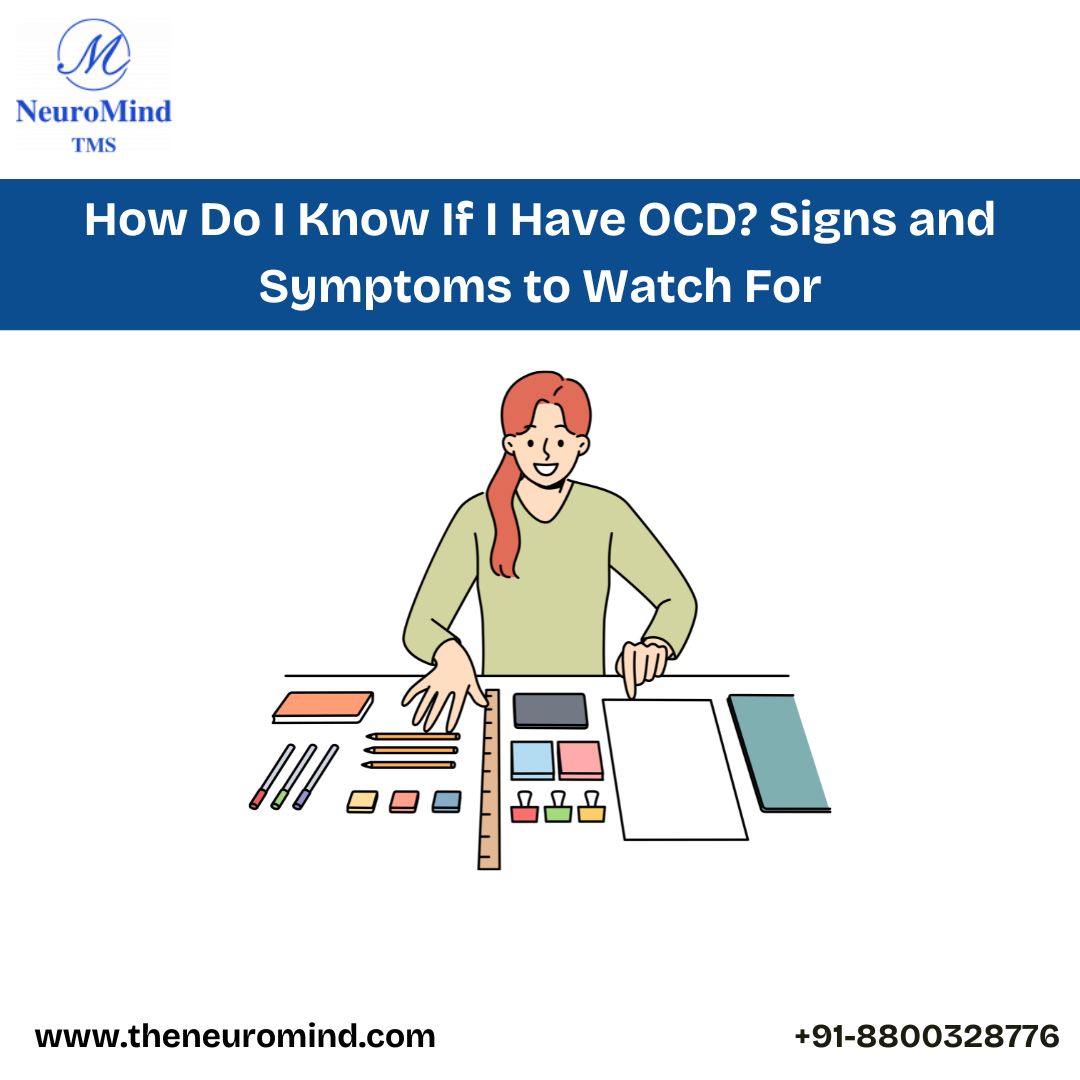
How Do I Know If I Have OCD? Signs and Symptoms to Watch For

Obsessive-Compulsive Disorder (OCD) is a complex mental health disorder that impacts millions globally. OCD is defined by recurrent, unwanted thoughts (obsessions) and repetitive acts or mental processes (compulsions) that are carried out to alleviate anxiety. Most people have odd obsessive thoughts or compulsive things they do, but for those who struggle with the disorder, it becomes a source of great distress and interferes with daily life. But how can you tell if you actually have OCD? Below are the key signs and symptoms to look out for.


The Basics of OCD: What Is it?

OCD is a lifelong disorder that can affect various aspects of functioning, such as work, relationships, and quality of life. It typically begins in childhood or early adulthood and can range from mild to severe. OCD is made up of two main parts:

Obsessions: Intrusive, unwanted thoughts, images or urges that create anxiety. Obsessions can range from fears of contamination to concerns about safety (e.g., leaving doors unlocked) to intrusive violent or taboo thoughts.

Compulsions — Repetitive actions or mental practices undertaken to relieve the anxiety generated by obsessions. Examples are excessive handwashing, repeatedly checking locks, or mentally counting certain numbers.

Signs and Symptoms of OCD

Wondering do OCD actually gets cured? 's first step is to acknowledge what it may look like and seek professional guidance. These are the most common symptoms of OCD:

Fear of Contamination

Anyone struggling with OCD may have extreme germ-, dirt-, or contamination-related fears. This can result in profuse handwashing, avoiding others and disinfecting things frequently.

Checking Behaviors

People might feel the need to check things again and again, for example, locking doors, turning off appliances, or checking that they haven’t done something incorrectly. These compulsions are often driven by fear of harm.

Unwanted Intrusive Thoughts

OCD can lead to disturbing thoughts, or mental images, about hurting oneself or others, sexual obsessions or blasphemous ideas. Such thoughts can be upsetting, even if the person doesn’t mean to act on them.

Need for Order and Symmetry

A strong desire for things to be arranged the right way or the need to maintain symmetry is another common symptom of OCD. Some will spend hours rearranging items or doing things a certain number of times until it “feels right.”

Hoarding Tendencies

Other OCD sufferers have difficulty throwing objects away, because they fear having thrown away something that is of great value. This creates cluttered spaces and heightened anxiety.

Ritualistic Behaviors

A common compulsion is doing certain things (counting, tapping or repeating words) to prevent imagined negative outcomes. These rituals can take time and disrupt daily lives.

On What to Know: When to See a Therapist

If you relate to these symptoms and they are impacting your daily life, it might be worth it to speak with a health professional. Finding a therapist for OCD near me can link you up with therapists who specifically work with individuals with OCD. One of the most effective treatment approaches for OCD is Cognitive Behavioral Therapy (CBT), and more specifically Exposure and Response Prevention (ERP). Medication, in some instances, is also prescribed to assist in controlling symptoms.

Can OCD Be Cured?

Though there’s no single cure for OCD the condition is very treatable, with therapy and medication. Most feel a tremendous alleviation of their symptoms and struggle through life far less. The right treatment approach and early intervention can make a big difference.

How The Neuromind Helps In The OCD Therapy Process

We have advanced OCD treatment to meet their needs at The Neuromind. We utilize CBT and ERP therapy which are scientifically proven to help patients break free from obsessive thoughts and compulsive behaviors. Using structured therapy sessions and tailored treatment, many of our clients find relief from OCD for the long term. We want to instruct you on ways of dealing with your anxiety so you can live life without it even controlling what you eat. Here at The Neuromind, we can help you on your path to recovery if you are looking for the best OCD therapist near you.